


Sourcing the Right Analytical Standards: Three Pillars to Consider
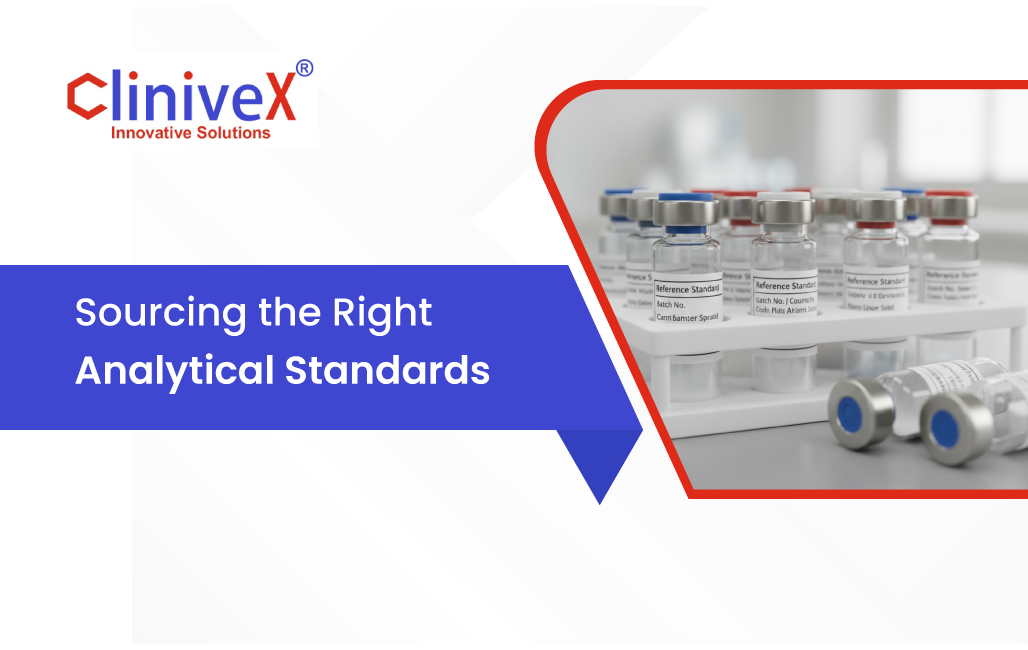

In every scientific research, whether it’s environmental testing, pharmaceuticals, or industrial quality control, success depends heavily on selecting appropriate materials. One such fundamental material amongst these is analytical standards.
They are reference samples usually characterized by their verified composition and specific mass. Selecting the right analytical standards is not just about convenience; it serves as a foundation for scientific credibility. However, before sourcing them from a reference standards supplier in USA, it is important to understand their essence and, most importantly, the three pillars of the gold standard.
Therefore, in this blog, we will highlight its meaning and significance, the three pillars of the gold standard, and the steps to choose the right analytical standard.
What Are Analytical Standards and Why Do They Matter
Analytical standards are compounds with known concentrations and purity that are used to properly identify or quantify analytes, validate analytical techniques, and calibrate instruments. In the majority of your analyses of unknown samples using GC, ICP, HPLC, or spectroscopy, you will compare the results to those of an analytical standard.
It might be to determine its concentration, which is quantitative analysis, or to identify a compound accurately, which is qualitative analysis. The foundation of any strong AQC system is the application of appropriate analytical standards, which provide a basis for repeatable, reliable laboratory results across all sectors.
Three Pillars of a Good Standard: Purity, Stability & Certification
1. Purity
Purity is the most common but also the most vital characteristic. An analytical standard needs to be free or almost free of impurities that might impede detection or measurement. High purity simply means that, in either comparison or calibration, the signals you detect match only the target analyte, not the impurities.
Purity is usually included in a CoA provided with the standard, which details identity, concentration, and impurity profile. You should avoid using an impure standard, as it could lead to inaccurate quantification, misidentification, and, in turn, flawed conclusions.
2. Stability
Stability refers to the preservation of the standard’s concentration and purity throughout time. When an unstable standard deteriorates, reacts with oxygen or moisture, or forms contaminants, calibration becomes invalid.
If you want repeatable results, you must take extra care to ensure the standard remains chemically unaltered until the expiration date or until storage conditions are compromised, especially when using the standard over several days, weeks, or months.
3. Certificate
A certificate serves more than just paperwork; it gives an assurance that the standard has been stringently characterized and that its identity, concentration, and purity have been validated.
Analytical standards, sometimes known as CRMs, are produced under established quality processes, typically in compliance with standards established by international standards organizations (such as ISO). A proper CoA and accompanying documentation ensure credibility and traceability of results.
Steps to Choose the Right Analytical Standard
Consider the following steps when choosing an analytical standard:
- Firstly, define the specification to determine the required specificity, detection sensitivity, and regulatory compliance.
- Secondly, check purity and identity documentation, and always request the CoA from the supplier.
- Thirdly, verify shelf life, recommended storage conditions, and any handling precautions.
- Next, ensure traceability and compliance with certification requirements.
- Lastly, source these standards only from a trusted analytical reference standards supplier.
Conclusion
The significance of choosing appropriate analytical standards in terms of purity, stability, and certificate cannot be overstated. Sourcing the right analytical standards today helps ensure that your data in the future can be trusted and relied upon.
However, if you are looking for a reliable supplier, then Clinivex offers world-class analytical reference standards with uncompromising quality and consistency.
related blog
Analytical Reference Standards: The Key Benchmarks to Support Method Validation & Calibration
Whenever a laboratory routinely tests new samples, it must prove that its testing procedures are...

The Role of Reference Standards Suppliers in Meeting Reagent Purity Standards
Chemical reagents are the hidden backbone of scientific research, manufacturing, and quality testing. Whether it...
Stable Isotope Labelled Standards: Investing in High-Purity Material for Modern Scientific Research
Science and technology are moving incredibly faster than ever before. Today, the researchers are discovering...