


API or Impurity: Which is the Right Reference Standard for Accurate Pharmaceutical Testing


In the pharmaceutical industry, accuracy is not just a goal; it’s a requirement. Every injection or tablet produced by the manufacturers must contain the exact amount as promised on the label. In order to achieve this, most professionals in the industry use benchmarks called reference standards to verify that a drug is safe and effective before it reaches a patient.
Two such types of benchmarks are active pharmaceutical ingredients (API) and impurity reference standards. However, one of the most critical challenges in pharmaceutical testing is to verify the right type of benchmark. Using a standard meant for API to measure impurities might get you the wrong results during testing. This mistake can lead to unsafe products being approved or high-quality batches being wrongly rejected.
To help you prevent such mistakes, we will present some critical differences between API and impurity reference standards in this blog. This will help you choose the right reference standard for accurate pharmaceutical testing.
Why Choosing Reference Standards for Impurity or API Matters
Reference standards serve as benchmarks to measure potency, purity, and safety. An API reference standard ensures that the medication has the precise concentration of the active ingredients needed to be effective when testing for potency.
However, using an API standard to measure a trace contaminant lacks the specificity required for the task. On the other hand, impurity standards are specifically designed to detect and measure minute degradation products or synthesis byproducts that can be harmful or shorten the drug’s shelf life.
Using the wrong standard may lead to costly delays, misleading results, or even product recalls. This is why it is important to choose the correct standard before sourcing from impurity or active pharmaceutical ingredients suppliers.
Comparison Table of API vs. Impurity Reference Standards
| Feature | API Reference Standard | Impurity Reference Standard |
| Primary Goal | Measures the strength and identity of active medicine. | Detects, quantifies, and characterizes impurities |
| Purity Level | High purity to act as a clear benchmark. | Characterized for a specific substance, even in trace amounts. |
| What it Proves | Confirms the patient gets the correct dose. | Confirms the medicine is safe and non-toxic. |
| Key Use Case | Stability testing, method validation, and release testing. | Impurity profiling, nitrosamine analysis, submissions. |
| Regulatory Importance | Needed in all batch release assays, and ensures potency meets label claims. | Required for impurity qualification and safety, and ensures contaminants stay below safety limits. |
Factors to Consider When Choosing Reference Standards for API or Impurity
Here are some factors that you should consider before sourcing from API or impurity reference standards suppliers:
- Regulatory Requirements: Regulatory authorities require validated reference standards; thus, it is essential to meet all the necessary regulatory requirements.
- Purity and Traceability: Standards should be highly pure and fully characterized with the methods.
- Stability: Standards should be able to remain stable under proper storage and testing conditions.
- Method Compatibility: The standard must be suitable for the testing platform.
Conclusion
Choosing between API and impurity standards is a fundamental part of pharmaceutical analysis. By partnering with reliable suppliers like Clinivex, you can source high-quality pharmaceutical impurities and certified reference standards for research and pharmaceutical analytical applications.
related blog
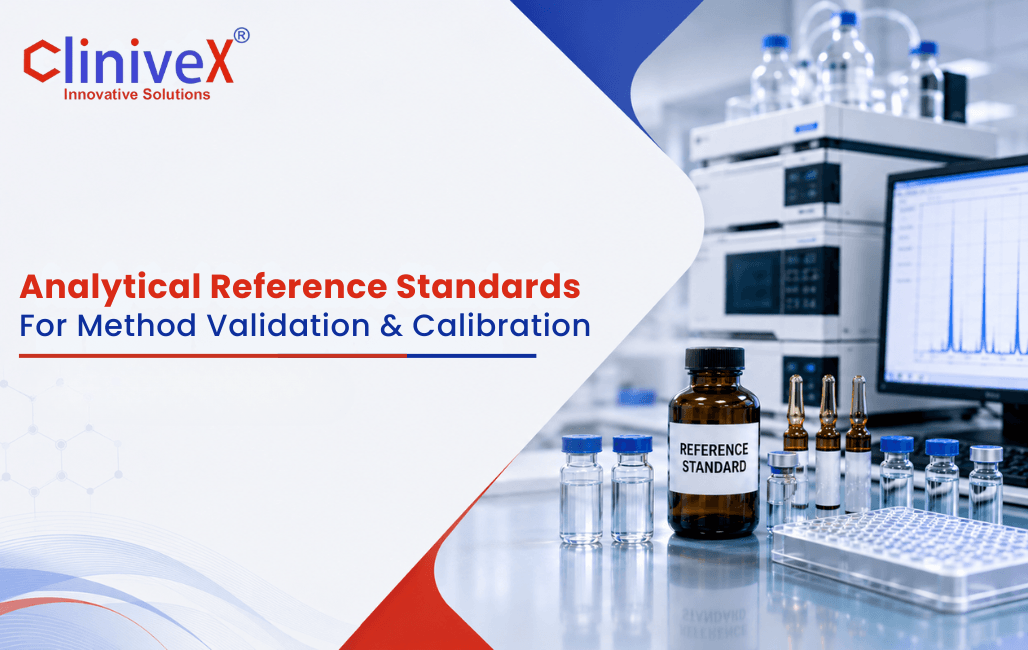
Analytical Reference Standards: The Key Benchmarks to Support Method Validation & Calibration
Whenever a laboratory routinely tests new samples, it must prove that its testing procedures are...
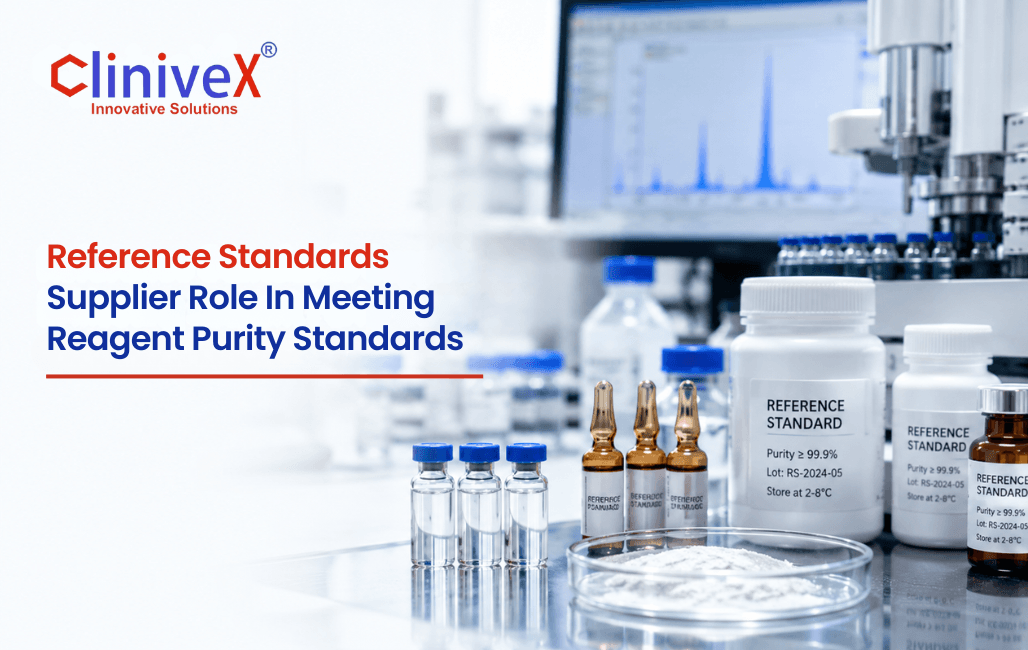
The Role of Reference Standards Suppliers in Meeting Reagent Purity Standards
Chemical reagents are the hidden backbone of scientific research, manufacturing, and quality testing. Whether it...
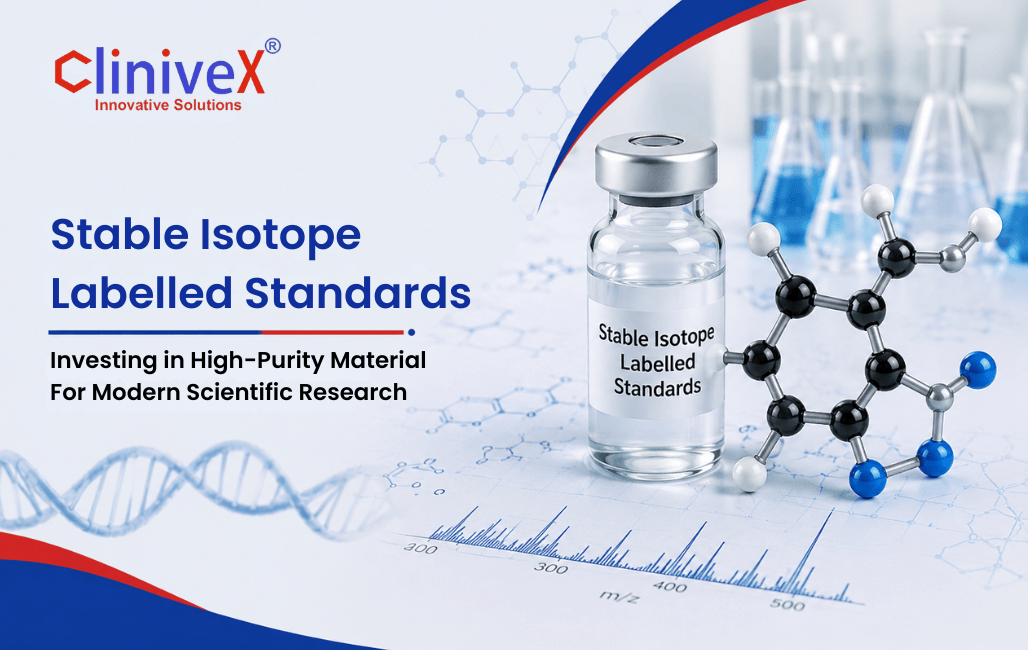
Stable Isotope Labelled Standards: Investing in High-Purity Material for Modern Scientific Research
Science and technology are moving incredibly faster than ever before. Today, the researchers are discovering...