


Procuring Nitrosamine Reference Standards: Managing Sources, Risks & Regulatory Concerns in Pharmaceuticals
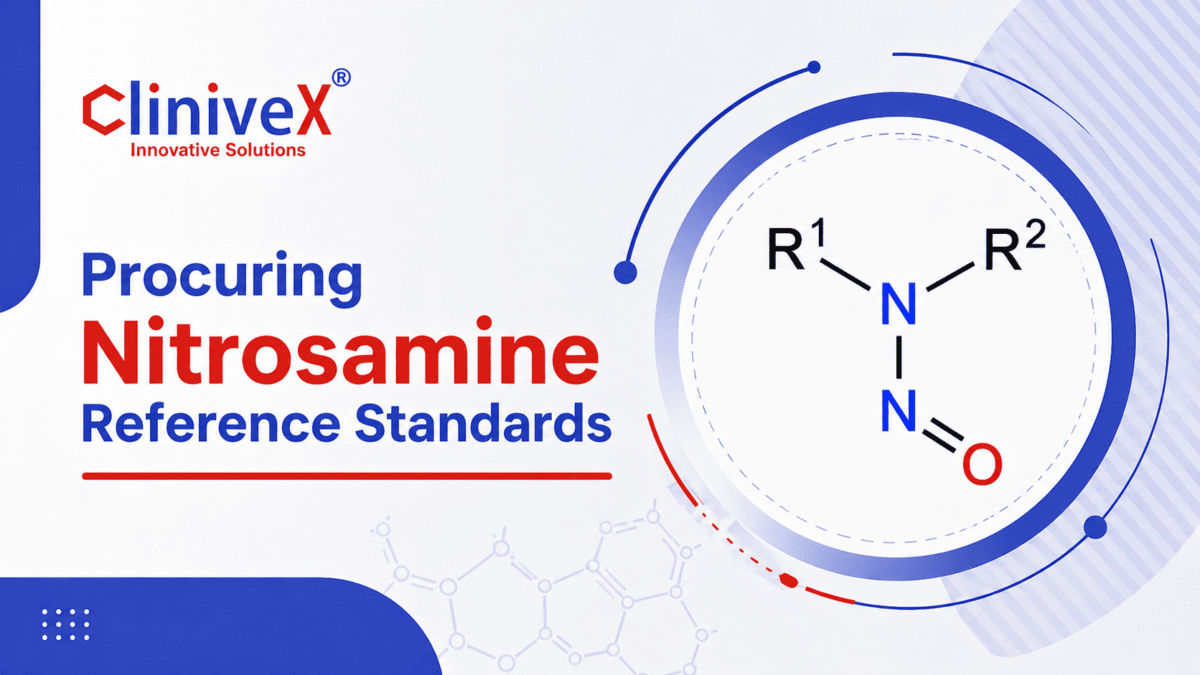

important. From the moment a drug is designed to the time it reaches the pharmacy shelf, every detail must be checked to prevent harmful substances from entering the supply chain. Maintaining high standards requires precise chemical benchmarks, such as nitrosamine reference standards. However, NDSRIs have become a major concern, as they pose potential carcinogenic risks.
Hence, through this blog, we aim to provide an in-depth understanding of nitrosamines, including their sources, risks, and regulatory concerns in the pharmaceutical industry.
What are Nitrosamines?
Nitrosamines are chemical compounds that have a Nitroso group (-NO) bonded to an amine group. Under certain conditions, such as heat or acidity, nitrites can react with amines to form nitrosamines, byproducts of pharmaceutical manufacturing, food processing, and water treatment.
Common Sources of Nitrosamines
1. Food and Beverage
Nitrosamines form when nitrite preservatives react with amines in processed meats such as sausages, ham, bacon, and hot dogs. Foods that are grilled or smoked also promote the formation of nitrosamines at high cooking temperatures.
2. Water and Environmental Sources
When chlorine is added to drinking water, it combines with natural organic matter, producing nitrosamines. Nitrosamines may be released into the environment by companies that manufacture rubber, pesticides, and dyes.
3. Pharma and Medical Products
The processes of drug synthesis that involve amines from APIs and nitrites from solvents can react, leading to the formation of nitrosamines. Cross-contamination from earlier production batches can introduce nitrosamines to the manufacturing equipment.
Risks and Regulatory Concerns in Pharmaceuticals
The personnel are at serious health risks like cancer due to the prolonged exposure to nitrosamines. These reference standards are classified as probable human carcinogens, as they have shown links to cancers of the stomach, liver, and oesophagus.
As a result of these risks, regulatory bodies across the globe have introduced the following stringent guidelines:
- Limiting Nitrosamine Levels: Bodies like the European Medicines Agency (EMA) and the U.S. FDA have established acceptable daily intake limits.
- Risk Assessments: The pharma companies should conduct risk assessments and implement control strategies.
- Implementing Product Recalls and Transparency: Regulatory bodies enforce product recalls and require greater transparency regarding potential contamination.
In order to avoid product recalls and help labs implement control strategies, reliable nitrosamine manufacturers and suppliers like Clinivex are adopting proactive measures.
Conclusion
Successful pharmaceutical manufacturing depends on eliminating impurities through precise control strategies. Partnering with expert suppliers like Clinivex ensures your facility stays compliant and avoids costly product recalls.
related blog
Analytical Reference Standards: The Key Benchmarks to Support Method Validation & Calibration
Whenever a laboratory routinely tests new samples, it must prove that its testing procedures are...
The Role of Reference Standards Suppliers in Meeting Reagent Purity Standards
Chemical reagents are the hidden backbone of scientific research, manufacturing, and quality testing. Whether it...
Stable Isotope Labelled Standards: Investing in High-Purity Material for Modern Scientific Research
Science and technology are moving incredibly faster than ever before. Today, the researchers are discovering...