


How Do Pharmaceutical Impurity Standards Help Labs Meet Quality and Regulatory Compliance?
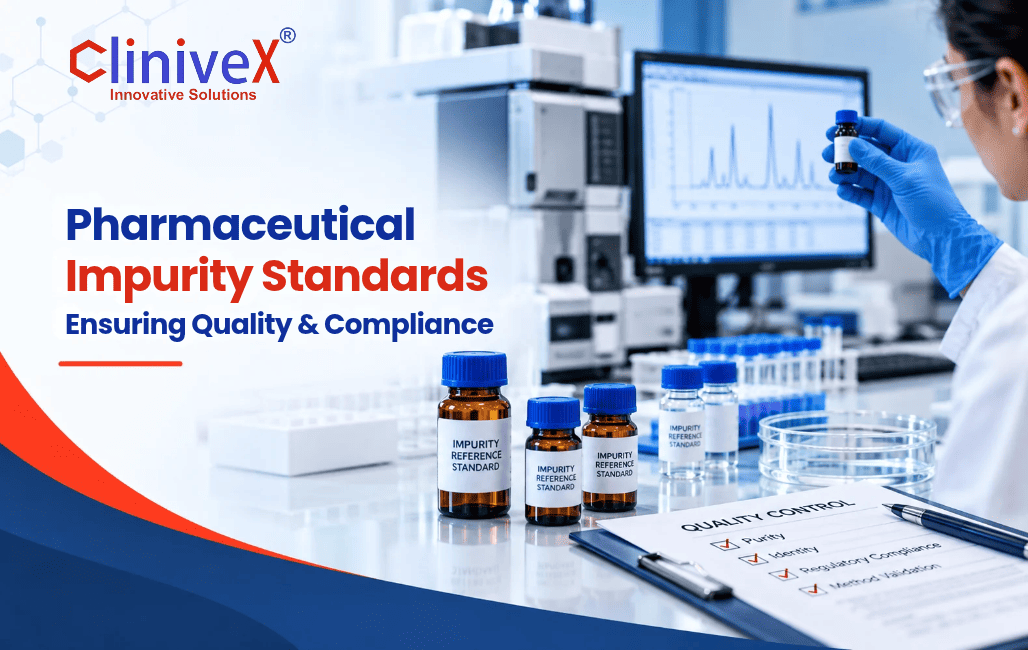

The pharmaceutical labs operate in an environment where even the smallest error can put patient safety at risk. Delivering effective medicines requires strict adherence to quality benchmarks as well as stringent regulatory frameworks. As the global regulatory authorities inspect every stage of development, testing labs must demonstrate complete accuracy and consistency before any batch leaves the facility.
In order to maintain this level of accuracy during routine quality control, labs require highly consistent chemical materials like impurity reference standards. This allows the testing teams to calibrate their sensitive instruments and establish a reliable baseline. However, before sourcing them from an impurity reference standards supplier, it is important to understand their role.
Therefore, in this blog, we will explain how these impurity standards help labs meet quality and regulatory compliance.
What are Pharmaceutical Impurity Standards?
Pharmaceutical impurity standards serve as highly characterized chemical benchmarks that allow testing laboratories to precisely isolate and measure unwanted substances in active pharmaceutical ingredients (APIs) and finished drug products. They ensure drug safety, quality, and compliance with global regulatory authorities.
During routine quality control, these standards act as a reliable benchmark to prove that a drug profile meets important global regulations. By comparing a test sample against a known and certified standard, the researchers can verify that the trace contaminants are safely within approved toxicological limits before public release.
The Role of Pharmaceutical Impurity Standards in Supporting Drug Quality & Compliance
1. Identification of Unwanted Chemical Compounds
Testing teams face some significant challenges when identifying complex unknown substances within active ingredients. Matching the test samples against highly purified reference benchmarks allows the team to quickly isolate structural impurities and map out accurate chemical profiles.
2. Quantification of Trace Impurity Substances
Even trace amounts of genotoxic elements can severely compromise consumer safety. Relying on certified drug impurity reference standards gives laboratories a precise measurement baseline and enables them to measure minute contaminants well below the international safety limits.
3. Method Validation for Testing Labs
The analytical testing procedures must go through strict validation protocols to ensure the reproducibility of the obtained data in different laboratory settings and equipment configurations. The teams can use these standards to verify the instrument sensitivity and secure reproducible data.
4. Prevention of Costly Batch Recalls
The release of commercial batches with unquantified or excessive impurities causes severe health problems, operational delays, regulatory intervention, and also compromises public trust. Incorporating rigorous screening at the production stage protects pharmaceutical brands from huge financial losses and product withdrawals.
5. Alignment with Global Regulators
The international regulatory agencies conduct surprise factory inspections in order to audit the manufacturing and testing activities. They verify whether the QC teams use fully characterized and traceable reference materials during product testing. Using certified standards provides the necessary proof to satisfy the strict pharmacopeial requirements, accelerates approvals, and avoids regulatory warnings.
How Do They Help Ensure Drug Quality Consistency?
Therapeutic activity, chemical stability, and patient toxicology can be affected by impurities. Using high-purity reference materials allows quality control laboratories to establish an unvarying baseline across every step of the manufacturing lifecycle:
- Impurity reference standards confirm the exact chemical structure of degradation products formed during accelerated stability testing.
- Testing teams can determine the accurate reference baselines using the high-purity pharmaceutical impurity standards during routine testing.
- They ensure that older medications maintain the same purity profile as newly formulated batches.
- Fully characterized reference standards prove the operational accuracy and calibration of the high-precision LC-MS and HPLC instruments.
How Clinivex Supports Reliability in Drug Impurity Reference Standards
Sourcing reference materials from a trusted supplier is really important for achieving defensible testing outcomes. As a leading impurity reference standards supplier, Clinivex provides a specialized, fully documented portfolio of certified materials to ensure absolute measurement accuracy:
- Rigorous Analytical Characterization: Verifies the chemical identity and concentration accuracy using advanced NMR, HPLC, LC-MS, and IR spectroscopy.
- Robust Documentation Support: Delivers each compound with a detailed Certificate of Analysis (CoA) that mainly contains the structural confirmation, assigned purity, and uncertainty data.
- Global Regulatory Alignment: Provides materials that are manufactured and qualified in compliance with GMP and ISO 17025 frameworks to support successful IND, NDA, and ANDA submissions.
Conclusion
Pharmaceutical impurity standards play a critical role in helping labs meet quality and regulatory compliance. And with Clinivex as your reference standards supplier, your lab can source the certified materials needed to maintain total batch consistency and compliance.
related blog
How Do Pharmaceutical Impurity Standards Help Labs Meet Quality and Regulatory Compliance?
The pharmaceutical labs operate in an environment where even the smallest error can put patient...
How to Choose the Best Reference Standards Supplier in the USA
Every day, labs across the globe rely on reference standards to calibrate equipment, validate testing...

Why Phytochemical Analytical Standards Are So Essential in Modern Laboratory Testing
In today's scientific landscape, labs are expected to deliver results that are accurate, traceable, reproducible,...