


Sourcing Premium Phytochemical Reference Standards for Scientific and Pharmaceutical Applications
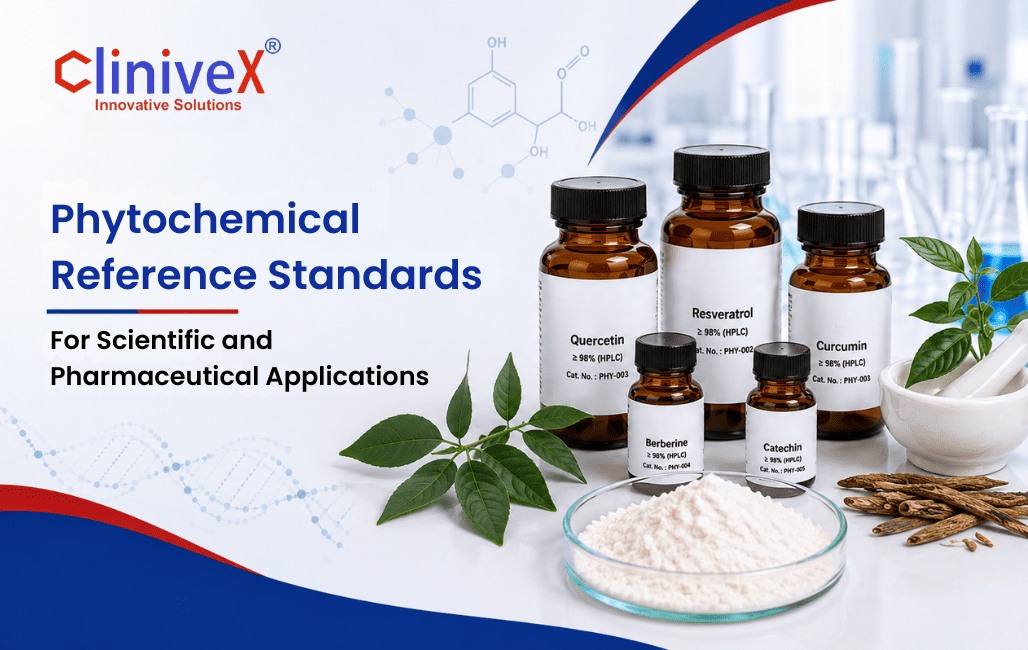

In the pharmaceutical and healthcare sectors, product consistency is a fundamental requirement. Whenever a consumer uses a plant-derived therapeutic, the expectation is that the product will deliver the same potency and efficacy regardless of the manufacturing batch. Achieving this kind of uniformity is very important for patient safety and consumer trust.
However, botanical raw materials are naturally variable due to various factors like climate, soil composition, etc. In order to overcome this challenge and ensure exact measurements, laboratories rely on phytochemical reference standards. These high-purity materials are indispensable for maintaining quality and accuracy in both scientific as well as pharmaceutical applications.
Furthermore, in this blog, we will outline the vital role of phytochemical reference standards by highlighting their meaning, significance, and applications in scientific and pharmaceutical research.
What Are Phytochemical Reference Standards?
Phytochemical reference standards are highly purified and well-characterized chemical compounds that are extracted from plants. They are mainly used in analytical testing, quality control, and research activities. These standards serve as important benchmarks for identification, quantification, and method validation in the nutraceutical, pharmaceutical, and botanical product analysis.
In order to achieve this, these standards isolate a single plant molecule to its purest form and remove all the other complex plant materials. This pure form serves as a reliable baseline for high-precision laboratory instruments. By comparing an unknown sample against this known baseline, researchers can easily confirm the exact identity and strength of a plant compound.
Why Are Phytochemical Reference Standards Important?
Overcoming Natural Chemical Variability
These standards provide an unchanging, universal baseline that eliminates guesswork. They allow different global laboratories to achieve identical and reliable testing results.
Ensuring Consistent Therapeutic Dosing
Every batch of medication that is made from the plants must have the same potency to be considered really safe. Manufacturers can accurately measure active substances because of these reference standards, ensuring that patients always receive a consistent therapeutic dosage.
Meeting Strict Regulatory Compliance
Global regulatory authorities demand absolute proof of product identity and purity before market approval. Utilizing certified reference materials satisfies all of these strict legal requirements and also helps the pharmaceutical companies avoid expensive compliance penalties and delays.
Validating Laboratory Testing Methods
Scientists must prove that their custom analytical methods are accurate and repeatable over time. These standards serve as the definitive benchmark to verify these test procedures. Without them, laboratories cannot legally defend or trust their quality control data.
Applications in Scientific and Pharmaceutical Research
1. Analytical Instrument Calibration
Scientists use these standards to set up high-precision laboratory machinery like HPLC and mass spectrometers. This creates a solid baseline curve so that the equipment can read and measure complex plant mixtures without any kind of errors.
2. Quantitative Assay Testing
Labs use these tests to find out exactly how much of an active ingredient is inside a plant mix. Comparing the raw harvest against a pure standard helps reveal precisely how much medicinal compound is present.
3. Stability and Shelf-Life Testing
Researchers leave plant products in hot or humid environments over time to see how fast they break down. Using the reference standards helps identify exactly when and how the active ingredients begin to lose their potency.
4. Impurity and Contaminant Profiling
These standards help in identifying and measuring heavy metals, trace contaminants, and also the residual solvents that may have contaminated the plant extract during production.
5. Method Validation for Trials
Before clinical trials begin, testing methods must be proven accurate as well as repeatable. Phytochemical reference standards serve as the constant control material needed to validate these laboratory procedures for global regulatory review officially.
Characteristics of High-Quality Reference Standards
- Purity Levels of 98% or Higher: Certified chemical purity reaches at least 98% in order to ensure proper accuracy during laboratory testing.
- Comprehensive Analytical Documentation: Every standard includes a detailed Certificate of Analysis (CoA) that verifies batch stability and the lot numbers.
- Application-Specific Stability: Engineered with consistent and reproducible chemical properties suitable for specific botanical workflows like validation or authentication.
Conclusion
Sourcing premium phytochemical reference standards is an important step toward achieving absolute analytical accuracy. As a trusted phytochemical reference standards supplier, Clinivex always provides laboratories with certified and high-purity standards for method validation, compound identification, and quality assurance programs.
related blog
Analytical Reference Standards: The Key Benchmarks to Support Method Validation & Calibration
Whenever a laboratory routinely tests new samples, it must prove that its testing procedures are...
The Role of Reference Standards Suppliers in Meeting Reagent Purity Standards
Chemical reagents are the hidden backbone of scientific research, manufacturing, and quality testing. Whether it...
Stable Isotope Labelled Standards: Investing in High-Purity Material for Modern Scientific Research
Science and technology are moving incredibly faster than ever before. Today, the researchers are discovering...